
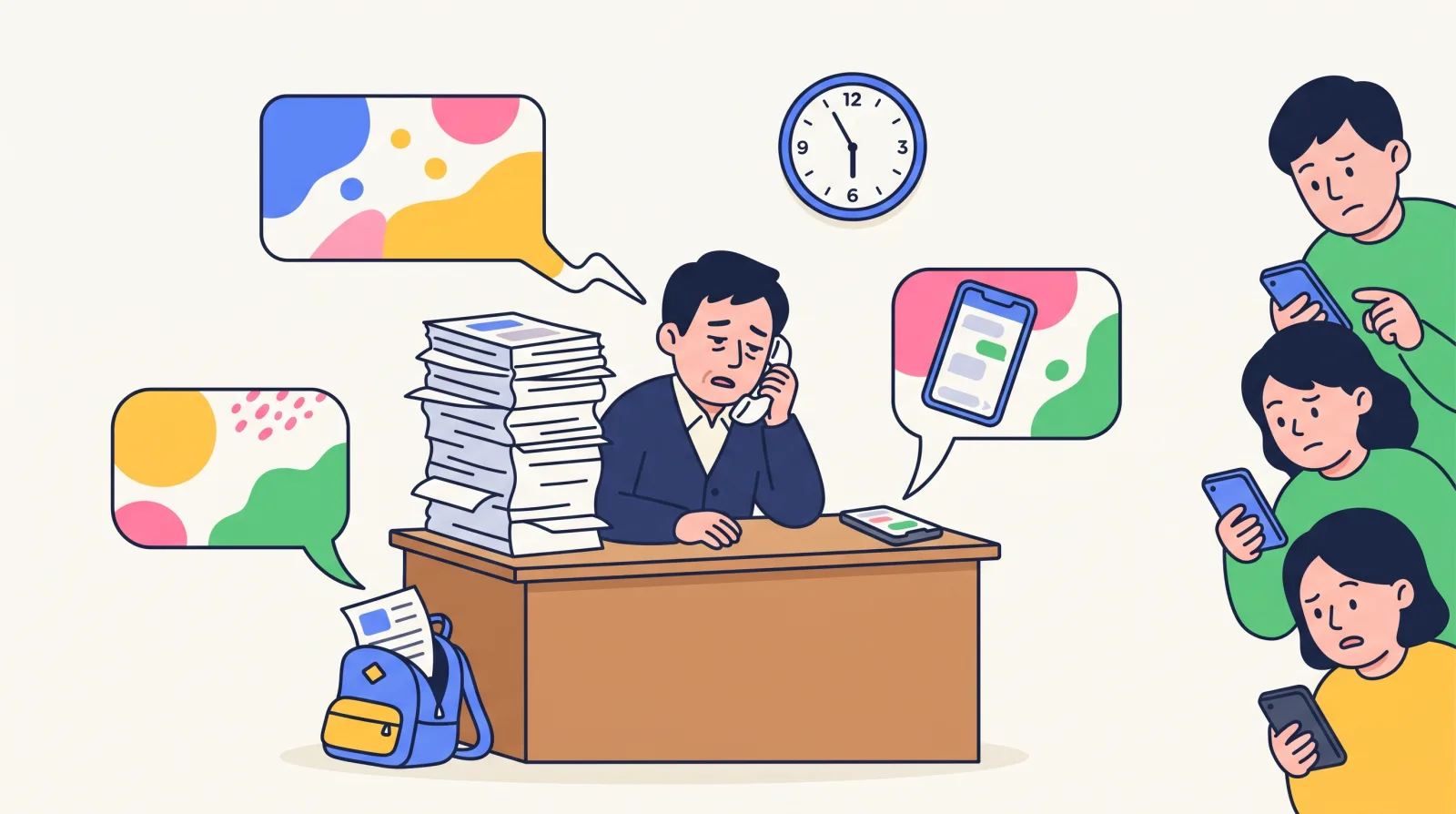
A 2022 survey of 300 parents and 70 cram schools conducted by POPER (Comiru) found that phone calls account for over 70% of current contact methods at juku. Yet in the same survey, roughly half of parents said they want digital communication, by email or messaging app.
The Communication Gap Leads to Dropouts
According to the POPER/Comiru 2022 survey, "parent communication problems" ranked second among reasons cited for student withdrawal, cited by 55.7% of school operators and 27.7% of parents themselves.
A 2019 POPER/Comiru study of 400 parents, including 200 who had previously withdrawn their child from a cram school, put the underlying issue into sharper relief:
"The top complaint among parents who withdrew their children was not about academic improvement, but about the frequency of progress reports (41.5%)."
— POPER (Comiru), Survey on Parent Satisfaction with Cram Schools, October 2019 (n = 400)
Reports on progress and weak areas, not academic results, was the single biggest dissatisfaction factor. Only 13.5% of the schools surveyed hold parent consultations at least once a month.
A 2025 LINE Yahoo survey of 3,008 parents and 889 teachers, supervised by Professor Ryo Uchida of Nagoya University, showed that 94% of parents want digital school communication — yet only 46% currently have it. A full 89% said they want all school contact consolidated into a single app. The same survey found that the top two pain points for both parents and teachers were "my child forgot to hand over the printed notice" and "calls don't go through during the day."
If you are currently managing parent contact via LINE and wondering whether to switch, see Why Running Parent Communication on LINE Has Its Limits — and When to Switch to a Dedicated App.
What E-Space Notification + Push Broadcast Does
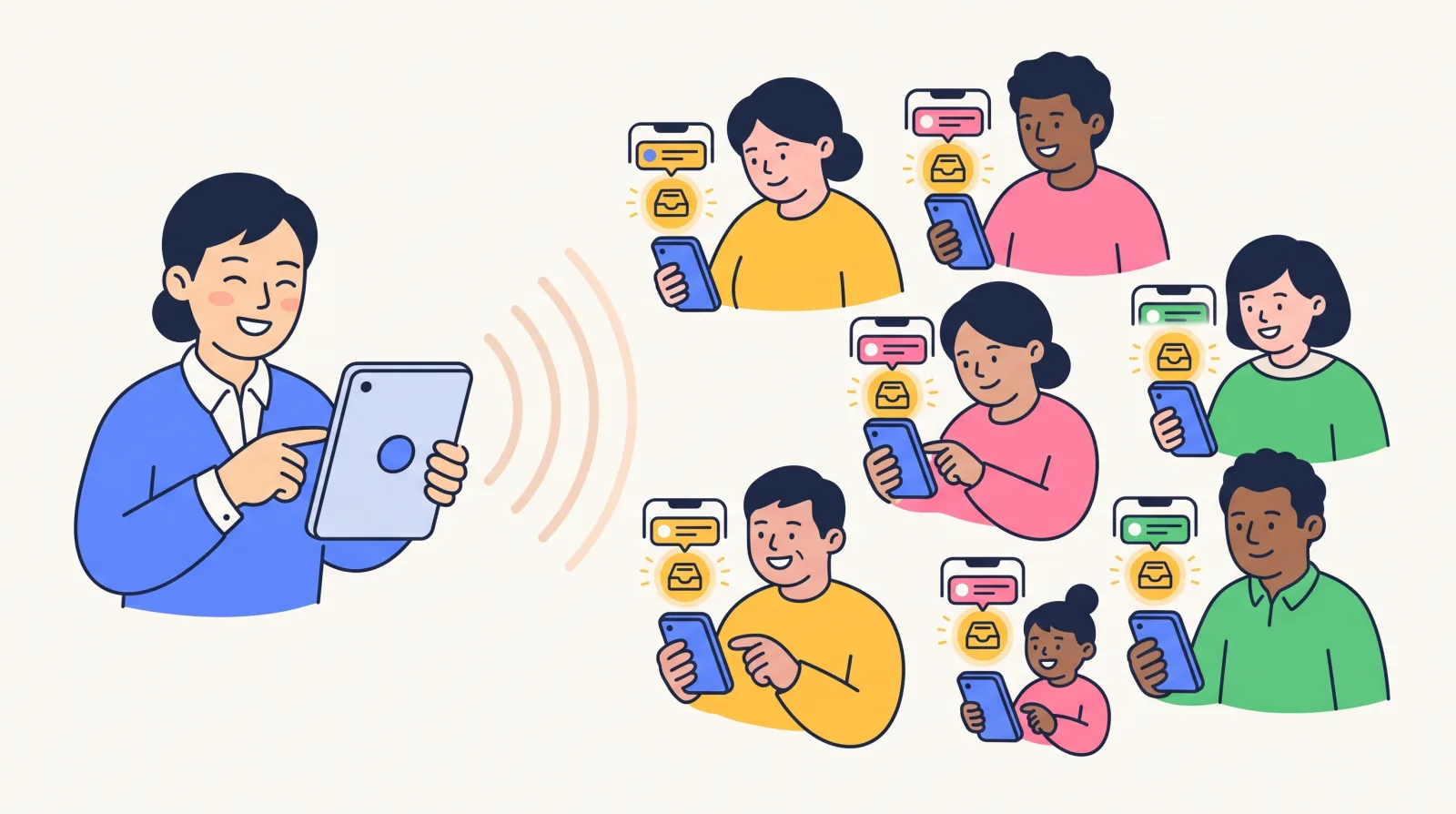
E-Space's broadcast announcement feature sends a single message to two places at once: the in-app Notification inbox and the device's home screen Push notification. One tap. Text, photos, and PDFs can be attached. Every registered parent receives it immediately.
1. One operation reaches every parent — contact cost drops to near zero
If a single return phone call takes five minutes, reaching 50 parents by phone takes over four hours. Printed notices add the work of printing, sorting, distributing, and then trusting a student to actually deliver them. A broadcast in E-Space completes the same task in one tap. Schedule changes, typhoon cancellations, and trial lesson announcements that used to demand hours of work go out in seconds.
2. Push notification plus in-app inbox: two layers to reduce missed messages
Push notifications are immediate, but they disappear from the notification tray quickly and are easy to miss. E-Space stores each announcement simultaneously in the in-app Notification inbox. A parent who dismisses the push alert can open the app later and still find the message waiting. This two-layer structure directly addresses the top two pain points identified in the LINE Yahoo 2025 survey: notices that never arrive because a student forgot to hand them over, and calls that go unanswered during the working day.
3. Delivery log makes "we told every parent" a provable fact
Verbal and phone-based communication leaves no record. When a parent says "we were never informed," there is no way to verify what was sent, when, or to whom. E-Space logs the timestamp, content, and recipient list for every broadcast. "We sent this announcement on July 8 at 3:45 PM to all 52 registered guardians" becomes a verifiable statement, not a memory.
Three Realities to Know Before Going All-In
The case for digital broadcast delivery is strong, but the data contains important counterpoints. Ignore them and the benefits will not materialize.
Reality 1: Push notifications do not reach more than 30% of parents from the start
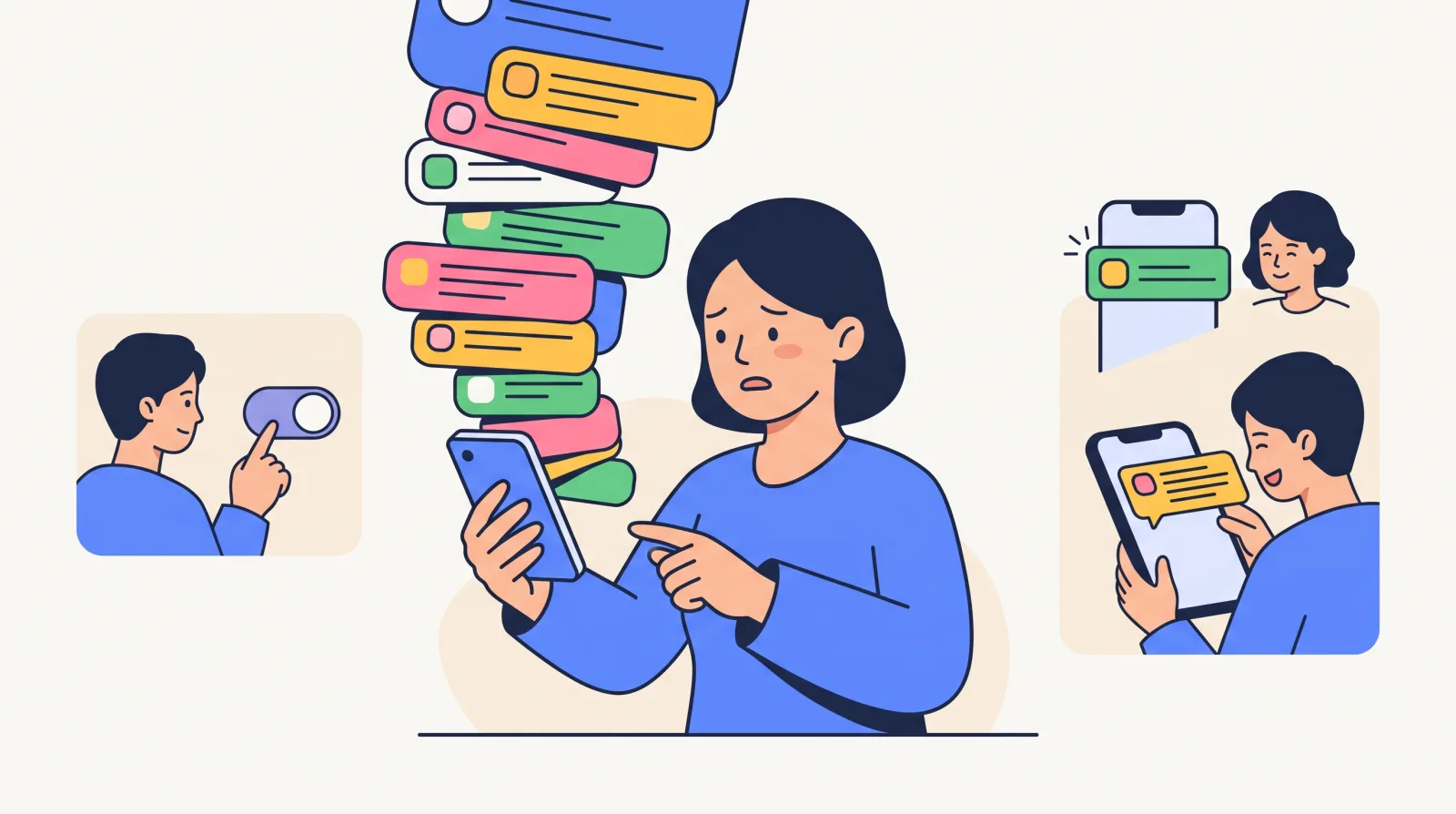
A 2024 survey by DearOne (n = 298) found that more than 30% of respondents across all age groups had disabled all push notifications on their device, and that for over half of their installed apps, push notifications had never been permitted in the first place. Push notification delivery depends entirely on parents having installed the app and allowed notifications. Onboarding support and explicit permission prompts are the prerequisite for broadcast delivery to work at all.
Reality 2: Too many notifications will get your app deleted
A 2024 survey by Alphanote (n = 500) found that the top reason respondents disabled all push notifications was "I get them too many times a day — it's annoying" (65%). Three in four respondents (75%) had deleted at least one company's official app at some point. Limiting broadcasts to schedule changes, urgent notices, and enrollment events preserves the channel's effectiveness.
Reality 3: During the migration period, information can scatter across channels and create confusion
The LINE Yahoo 2025 survey that showed 94% of parents want digital communication also showed that only 46% currently have it. The gap between intent and implementation reflects the real cost of migration: new apps must be downloaded, old habits take time to change, and different families move at different speeds. During the transition period, LINE, printed notices, phone calls, and the new app will all be running in parallel for some portion of your parent base. This fragmentation creates information asymmetry: some families receive the broadcast immediately; others are still checking the flyer from last week.
E-Space is designed with these realities in mind. The in-app Notification inbox means parents who have turned off push alerts can still read announcements whenever they open the app. Broadcast frequency and recipient scope, from all parents to a specific class or individual guardians, are controlled by the school.
Centralizing Parent Contact Builds Trust — and Retention
The number one reason parents withdrew their child from cram school was not dissatisfaction with academic results. It was the frequency of progress reports (41.5%).
Communication frequency, not academic results, drives 41.5% of cram school withdrawals; one-tap broadcast delivery to every registered parent is where the reversal starts.