
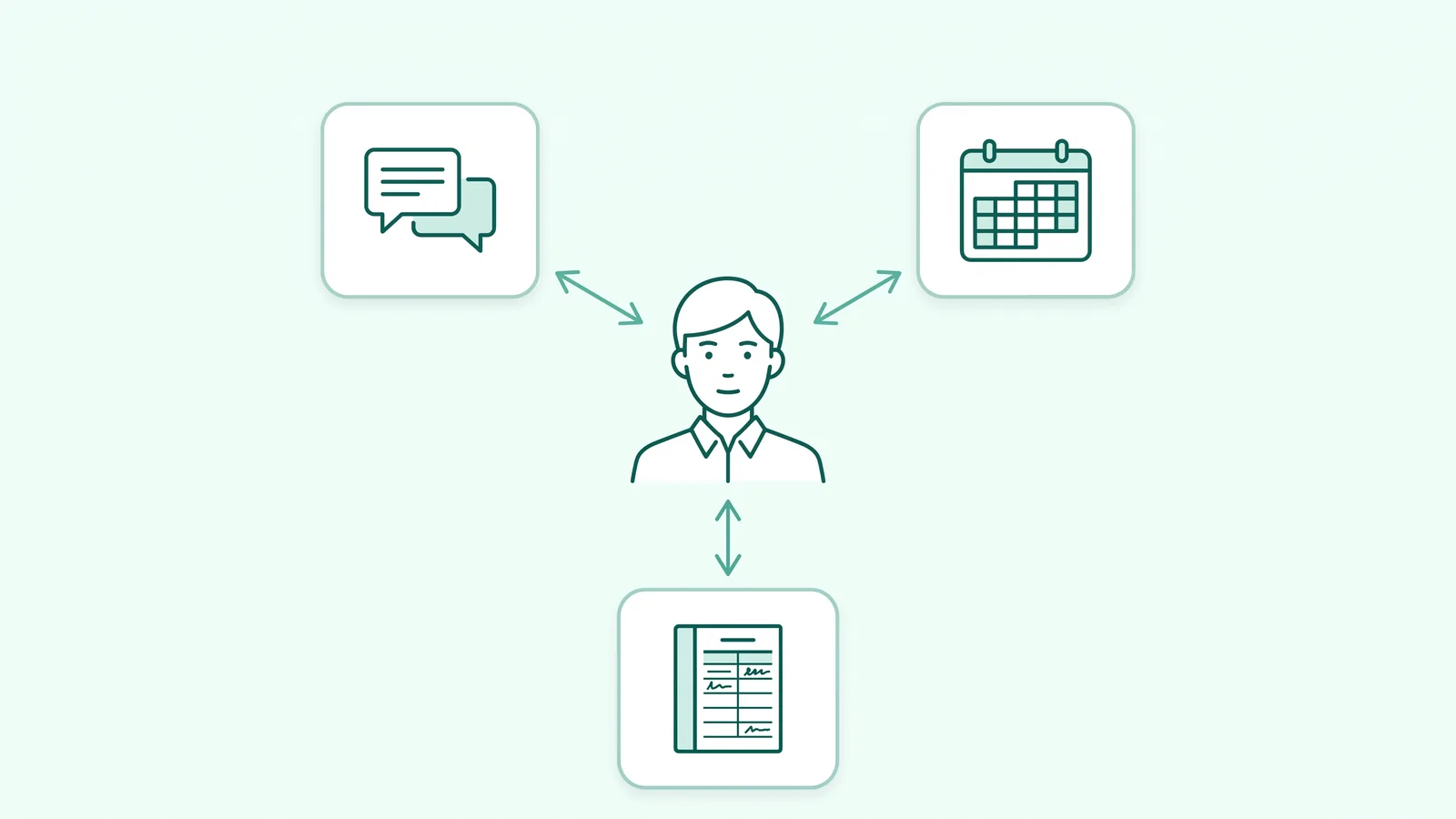
When a part-time tutor calls in sick, many tutoring centre owners follow the same pattern: message the staff group chat to find a substitute, wait for replies, confirm availability, then separately notify affected parents. That chain of steps — triggered by one absence — is a direct consequence of keeping shift rosters and class schedules in separate systems.
Why tutor scheduling is structurally complex
Japan's Ministry of Economy, Trade and Industry reported in its 2018 survey of the learning services sector that 71.9% of tutoring school staff are part-time or casual workers. With 327,547 total staff across 46,734 establishments (computed from the same survey), the average centre employs roughly 7 people — the majority of whom have variable weekly availability.
Unlike managing fixed-employee attendance, tutor scheduling requires matching two moving targets week by week: what students need (subject, day, assigned tutor) against what tutors can offer (available hours). Add makeup lessons to the mix — common around exam periods — and the coordination overhead grows further. (For makeup class design, see our guide on managing makeup lessons.)
The hidden cost of three-tool management
The most common setup: a calendar app for classes, a group chat for shift requests, and a paper register for attendance. To answer the question "who can teach Tuesday this week and for how long?", a centre owner must read the group chat, cross-reference the calendar, and check the register for each tutor's accumulated hours. That three-step lookup happens every week, and each substitution request restarts it.
What changes when shift and schedule share one app
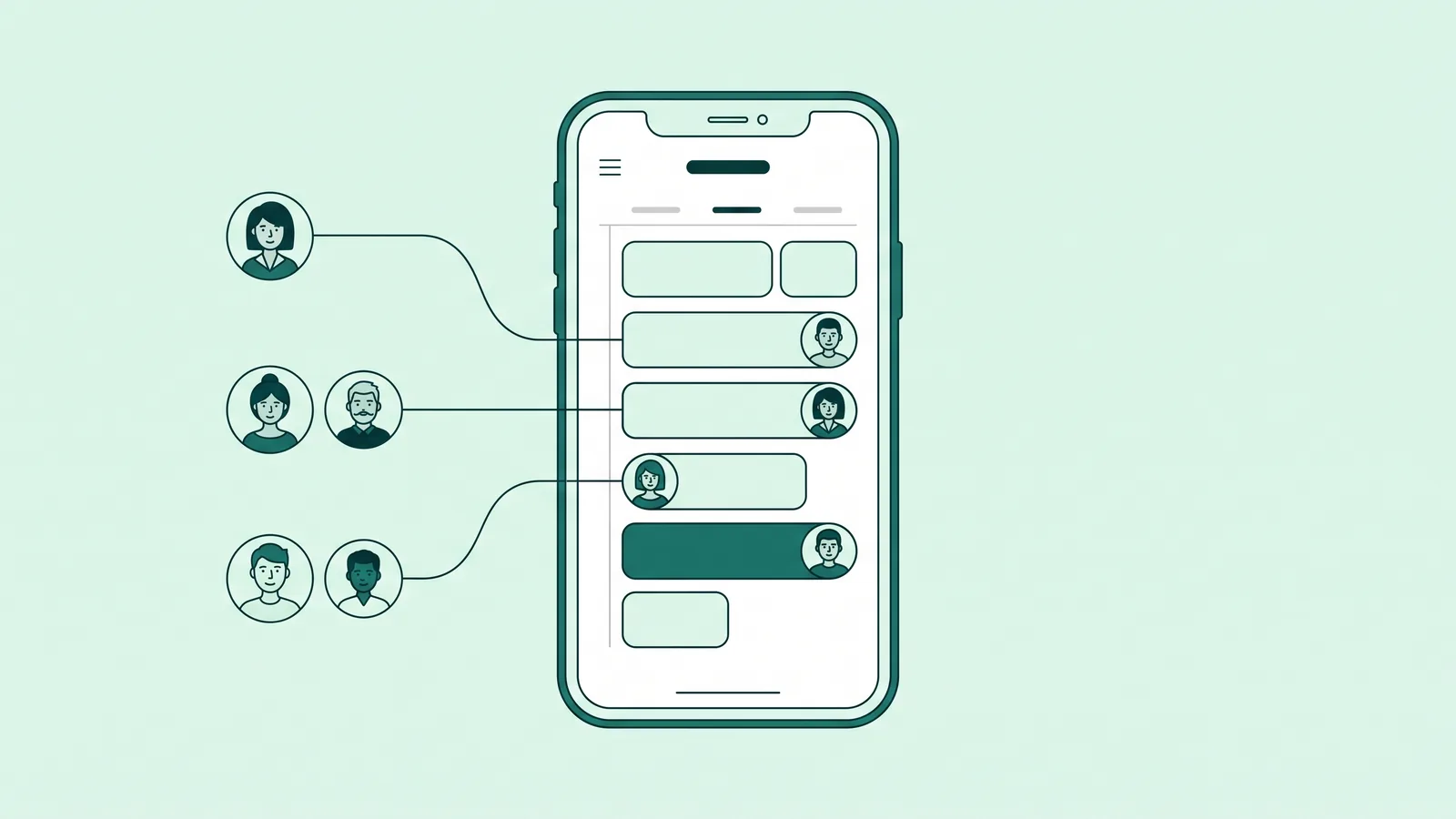
In E-Space, tutors are registered as Teachers and linked to their classroom's teachers[] record. When a class is created in Schedule, the assigned teacher comes from that list. The result: who teaches what, when, is visible in one place.
When a substitution is needed, the workflow goes from three steps (find substitute in chat → update calendar → notify parents via separate message) to two: change the assigned teacher in Schedule, send the update notification. The substitution and the parent notification happen in the same action flow, which removes the most common source of missed communications.
Three things no scheduling app can do for you
1. Automatically generate the optimal roster
Staff scheduling is an NP-hard combinatorial optimisation problem, well-established in operations research literature (Ernst, Jiang, Krishnamoorthy & Sier, European Journal of Operational Research, 2004). As subject requirements, time constraints, room limits, and leave requests multiply, the number of valid combinations grows faster than any tool can exhaustively evaluate. What an app provides is conflict detection and change visibility — not an automatically optimal schedule. The final call stays with the owner.
2. Reduce tutor turnover on its own
Research by Choper, Schneider & Harknett (2019) quantified the relationship between shift notice and turnover in service-sector workers:
"In terms of predicted values, turnover was 37% among those with 0-3 days' advance notice against 24% among those with at least two weeks'."
— Uncertain Time, The Shift Project working paper, October 2019
A 13-percentage-point difference driven not by the tool used but by how far in advance schedules are confirmed. Switching to a scheduling app while keeping the same last-minute confirmation habits will not move that number. The operational rule — confirm shifts at least two weeks out — has to come first.
3. Make growth cost-linear
With 71.9% of tutoring staff on part-time or casual contracts, adding a tutor adds recurring overhead: recruiting, onboarding, weekly schedule coordination, and emergency substitution logistics. Each additional person multiplies the number of combinations that need managing. A consolidated tool reduces the coordination friction per person, but it does not eliminate the compounding management load that comes with a larger casual workforce.
The real gain: eliminating lookup time
Choper et al.'s data points to what actually matters for tutor retention: confirmed schedules, delivered early. A system where shift and class information share one view makes it easier to confirm schedules ahead of time — because the information needed to make that decision is in one place, not three. That's the practical case for consolidation: not automation, but the ability to act sooner. For how stable scheduling connects to parent trust and student retention, see our piece on reducing student dropout at tutoring centres.